chemetry's platform
science & engineering validated at scale
Lower Cost, Safer Production
& Smaller Carbon Footprint
We've pioneered a new technology platform
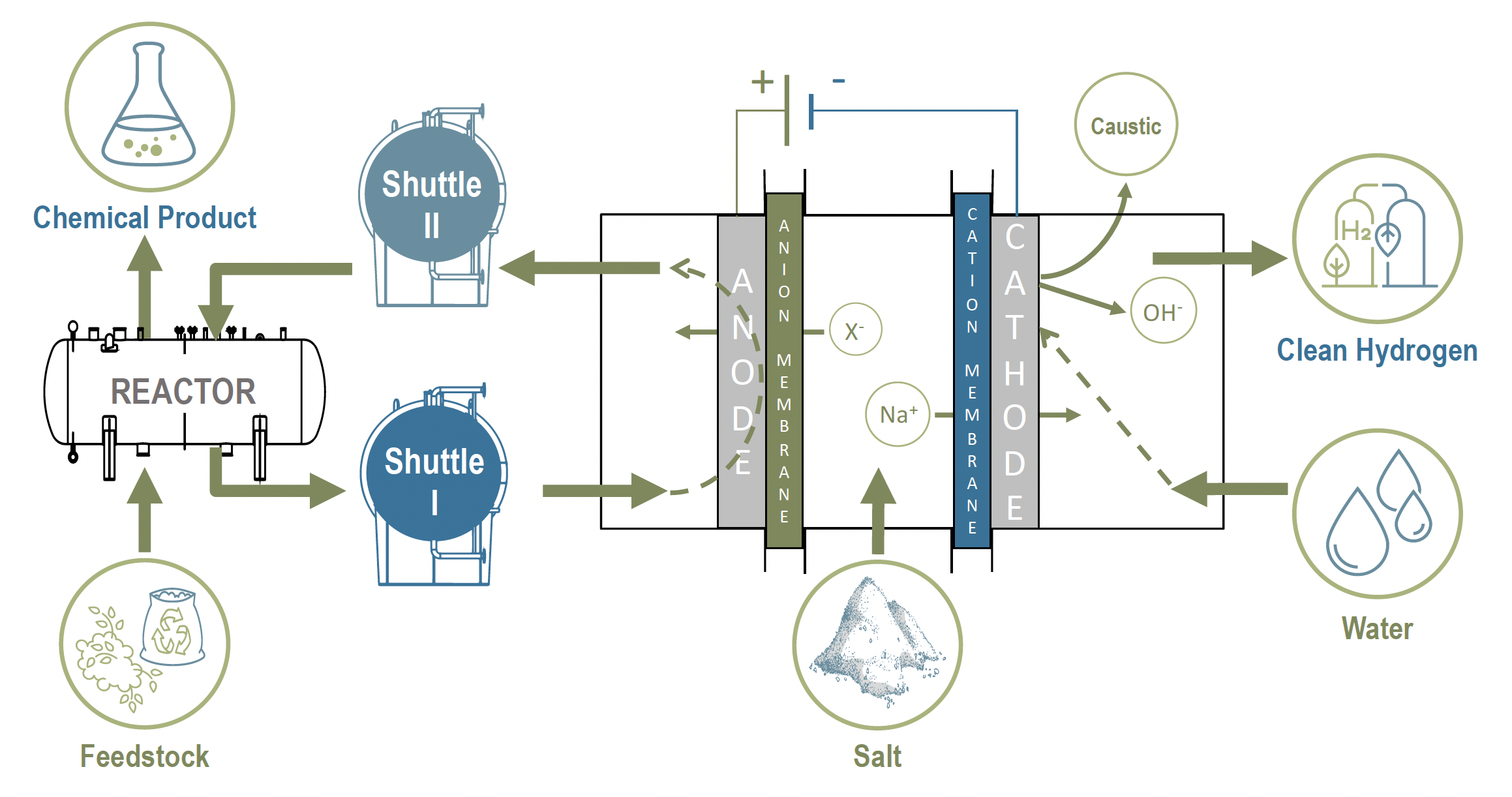
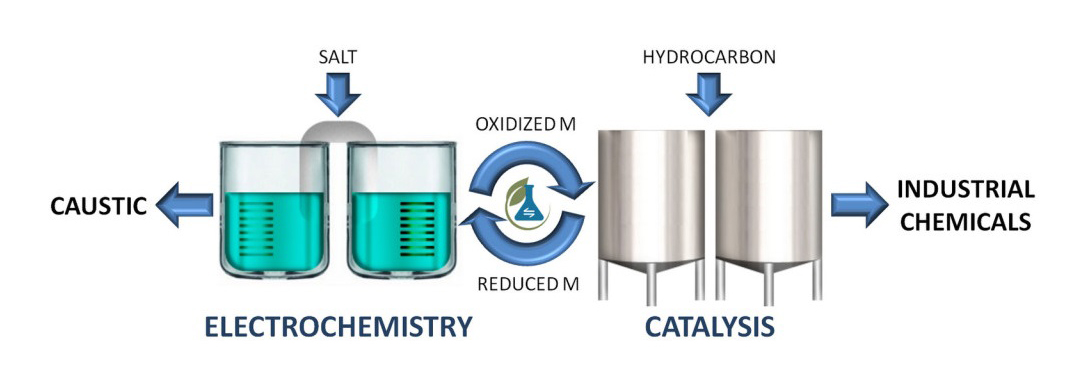
that combines electrochemical and catalytic processes to produce caustic soda and a suite of chlorinated and halogen promoted chemicals. This membrane based technology avoids chlorine gas with a metal chloride reaction between two integrated processes.
lower energy metal chloride reaction
eShuttle® EDC
Our first product with the eShuttle® platform is the production of ethylene dichloride (EDC) with sodium hydroxide and hydrogen gas. In the conventional production method, salt and water are electrochemically split through the chlor-alkali process to produce chlorine gas, sodium hydroxide and hydrogen gas. The chlorine gas then reacts with ethylene gas in the direct chlorination process to produce ethylene dichloride.
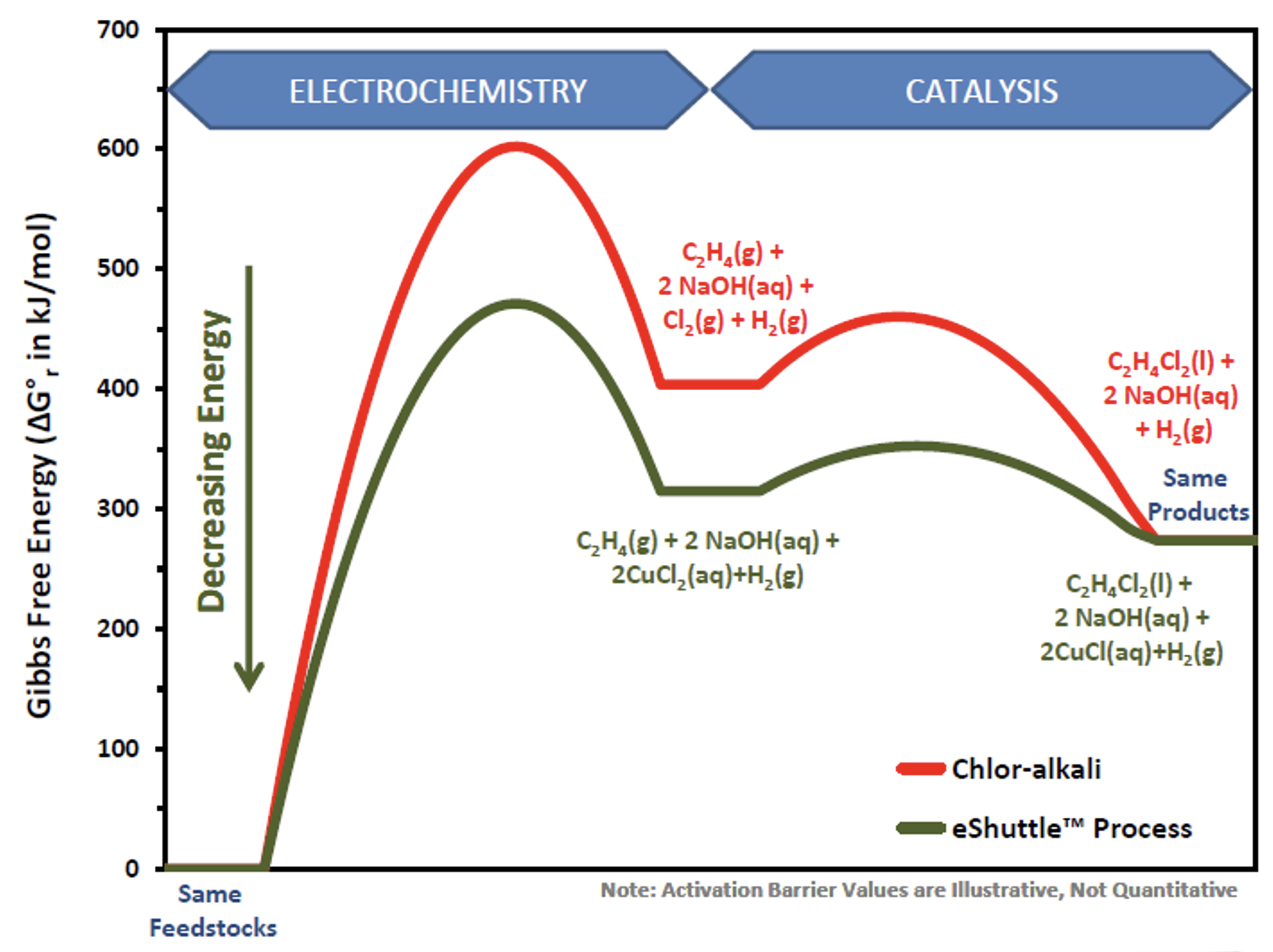
Our technology uses the same feedstocks to produce the same products with our lower energy metal chloride reaction. The eShuttle® process also electrochemically splits salt and water, but the platform avoids the required energy associated with the production of chlorine gas.
Lower Energy
A Free Energy diagram demonstrates significant energy savings to arrive at the intermediate reactants and achieve the same final products from the same raw materials.
Our eShuttle® platforms is also compatible with oxygen depolarized cathode (ODC) technology and the combination of eShuttle® EDC and ODC further lowers the power consumption.
The chlor-alkali industry: chlorinated organics (EDC), is over 100 years old with existing operations that utilize chemicals that are hazardous to the environment and human health. Chlor-alkali is very energy intensive resulting in a significant carbon footprint with further environmental and health impacts.
Traditionally, chlorine gas has been essential to the chemical industry with a wide range of applications including plastics, pharmaceuticals, and cleaning products. Chlorine gas also poses significant health risks. Even at very low concentrations, chlorine results in serious tissue damage, particularly in the lungs.
eliminates waste water
eShuttle® PO
Our second product is Propylene Oxide (PO). PO is a high value chemical intermediate used in the production of polyurethane foams and coatings, and personal care products. The various processes for propylene oxide all suffer from one or more of the following challenges: prohibitive up-front capital requirements, high power consumption, low-value byproducts and significant wastewater discharge. Based on a bromine version of the eShuttle® platform, our eShuttle® PO uses less capital and power. In addition, our process allows the salt to be recycled back to the electrochemical cells, reducing waste water to near zero.
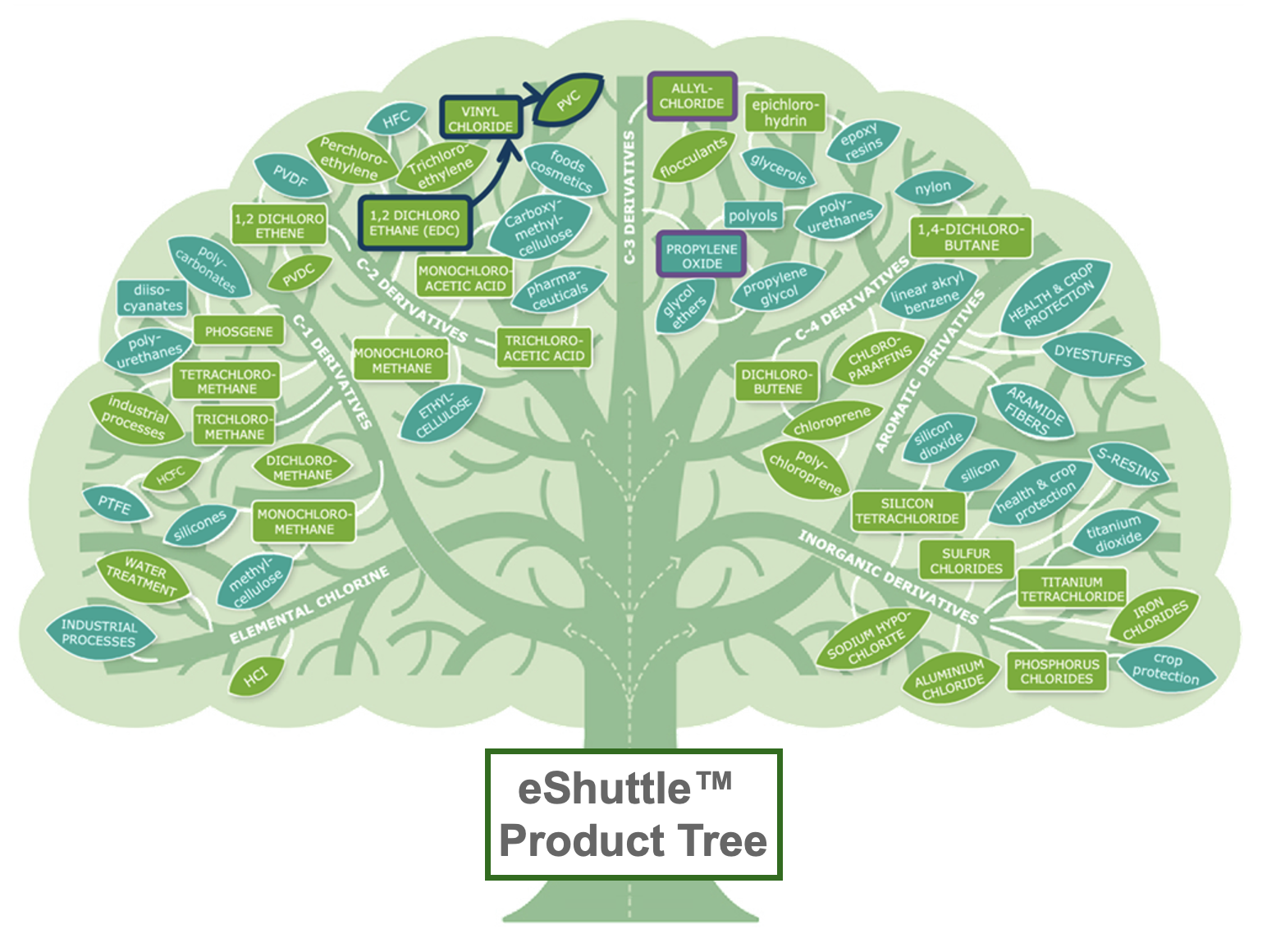
As we have further explored our technology, we have discovered that there are new salts that we can use effectively. This capability will continue to open up new opportunities for our technology.